
Winter-Ready Garage Doors: Post-Hurricane Season Checklist for Live Oak
Getting your garage door ready for winter in Live Oak mostly means undoing what summer did to it. Months of heat, humidity, and afternoon downpours swell wood, rust hardware, and gum up moving parts, and if any storms rolled through during hurricane season, they likely loosened something too. The fix is a short inspection and tune-up before the first real cold snap tightens metal and makes small problems obvious.
Check What Summer Humidity Left Behind
North Florida humidity doesn't just feel uncomfortable, it gets into your garage door system. Wood panels can swell and stick in their tracks. Steel hardware, especially hinges, bolts, and track brackets, can develop surface rust, particularly in homes closer to the coast where salt air accelerates corrosion. Walk around your door and look for:
- Rust spots on hinges, tracks, or the bottom bracket
- Panels that look warped or don't sit flush against each other
- A musty smell or visible moisture staining near the bottom seal
Wipe down metal parts and apply a light coat of a silicone-based lubricant (not WD-40, which attracts dust and doesn't hold up) to hinges, rollers, and the track. If you find active rust, a wire brush and a rust-inhibiting primer can buy you time, but heavy corrosion on springs or cables is a sign those parts need replacing, not just cleaning.
Inspect Weatherstripping and Seals
Florida winters are mild compared to most of the country, but Live Oak still gets cold nights and the occasional hard freeze warning. A garage that's been sealed against summer rain can develop gaps over time as rubber weatherstripping dries out, cracks, or pulls away from the door. Run your hand along the bottom seal and side seals on a sunny day; if you can see daylight or feel airflow, it's time to replace it.
This matters for two reasons. First, gaps let in cold drafts that make an attached garage colder, which affects anything stored there and any room sharing a wall with it. Second, the same gaps that let in cold air let in wind-driven rain, and Live Oak's afternoon downpours don't stop just because hurricane season is winding down. A tight seal keeps both out.
Test the Balance and Watch the Springs
Temperature swings affect spring tension more than most homeowners realize. Metal contracts in cold weather, which can make a door that was perfectly balanced in July feel heavier or stiffer once temperatures drop. Disconnect the opener (pull the release cord) and lift the door halfway by hand. It should stay in place on its own. If it drifts down or feels noticeably heavier than it did a few months ago, the springs are likely wearing out or losing tension.
Don't attempt to adjust torsion springs yourself. They're under extreme tension and have caused serious injuries when handled without the right tools. If your door fails the balance test, that's a job for a professional garage door spring repair visit, not a weekend project.
Check the Opener and Safety Features
If storms knocked out power at any point this fall, check whether your opener's battery backup (if it has one) still holds a charge. Also test the auto-reverse safety feature by placing a block of wood on the ground where the door closes; it should reverse immediately on contact. Humidity and power surges from storm season can both affect opener electronics, so it's worth confirming the remote, keypad, and wall switch all still respond reliably before you're relying on them during a cold, dark evening.
Retighten Hardware Loosened by Vibration
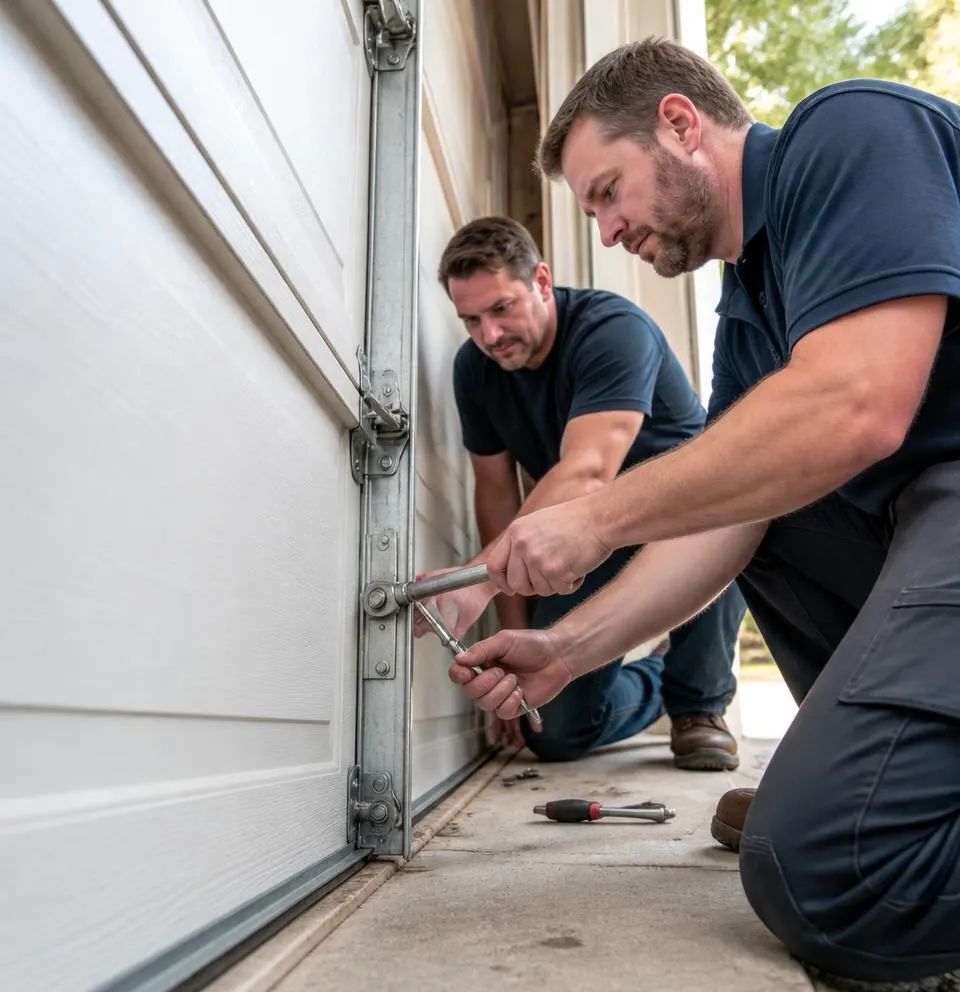
Every door cycle, plus any shaking from storm winds over the summer, gradually loosens the bolts holding tracks, brackets, and hinges in place. Loose hardware is one of the most common causes of a door that suddenly starts rattling, running off-track, or binding partway through its cycle. Grab a wrench and go over the visible bolts along the track and around the hinges; snug anything that's loose, but don't overtighten into stripped wood or metal.
Think About Insulation If You Use the Garage Year-Round
If your garage doubles as a workshop, storage space, or anything where temperature matters, an uninsulated steel door will let more cold in during winter mornings and more heat in come spring. Adding insulation panels to an existing door is a relatively affordable upgrade, or it's worth factoring in if you're due for a garage door installation and replacement anyway. It also helps dampen noise and adds a bit of rigidity against wind, which matters again once storm season rolls back around.
When to Call Live Oak Overhead Door Co
If your door fails the balance test, if springs show rust or visible wear, or if the opener isn't reversing properly, those aren't things to troubleshoot alone. Our team handles garage door spring repair and garage door maintenance and tune-up visits throughout the Live Oak area, and we'll catch issues like worn cables, misaligned tracks, or a door that's drifted out of balance before they turn into a door that won't open on a cold morning. We also handle off track door repair if storm vibration or worn rollers have knocked your door out of alignment.
A half-hour tune-up now is a lot cheaper than an emergency repair in January. If you're in Live Oak, Wellborn, Branford, Mayo, Jasper, or anywhere nearby and your garage door needs a pre-winter check, give Live Oak Overhead Door Co a call and we'll get it handled right.