
The Short Answer
Once every season, spend twenty minutes with a flashlight, a tape measure, and a can of garage-door-rated lubricant. Look at the tracks, listen to the opener, check the weatherstripping, and tighten what's loose. That's it. Done four times a year, this routine catches the rust, swelling, and worn hardware that Suwannee County's humidity and storm cycles cause before they turn into a broken spring or an off-track door.
Why Every Season Matters Here
A garage door in North Florida works harder than one in a dry climate. Humidity swells wood panels and wood-composite doors, salt-tinged air moving inland after coastal storms speeds up rust on springs and hinges, and the heavy rains of hurricane season push water and grit into tracks and rollers. A twice-a-year check isn't enough to stay ahead of that. Four short sessions a year, spaced roughly with the seasons, means you're never more than a few months behind on catching a problem.
Tools You'll Need
- Flashlight or headlamp
- Tape measure
- Socket set or adjustable wrench
- Can of silicone-based garage door lubricant (not WD-40, which washes away and attracts grit)
- Soft cloth or rag
- Step stool
The 20-Minute Routine
1. Visual Sweep of the Tracks (3 minutes)
Walk the full length of both vertical tracks with your flashlight. You're looking for dents, rust spots, or gaps where the track has pulled away from the wall. Light surface rust is normal; flaking rust or a bent section is not.
2. Check the Rollers (3 minutes)
Open the door partway and watch the rollers as they move through the track. Healthy rollers turn smoothly and sit flush in the track. Wobbling, chipped, or cracked rollers — common after a few years of humidity exposure — are a sign they're near the end of their life.
3. Lubricate Moving Parts (4 minutes)
Apply a light coat of silicone lubricant to the rollers, hinges, and the opener's chain or screw drive. Skip the springs — they need a different approach, covered below. Wipe off excess so it doesn't attract dust.
4. Tighten Hardware (4 minutes)
Using your socket set, check the bolts on the track brackets and the hinges. Vibration from daily use and from storm winds gradually loosens these. Snug them up, but don't overtighten — stripped holes in the track are worse than a slightly loose bolt.
5. Test the Weatherstripping (2 minutes)
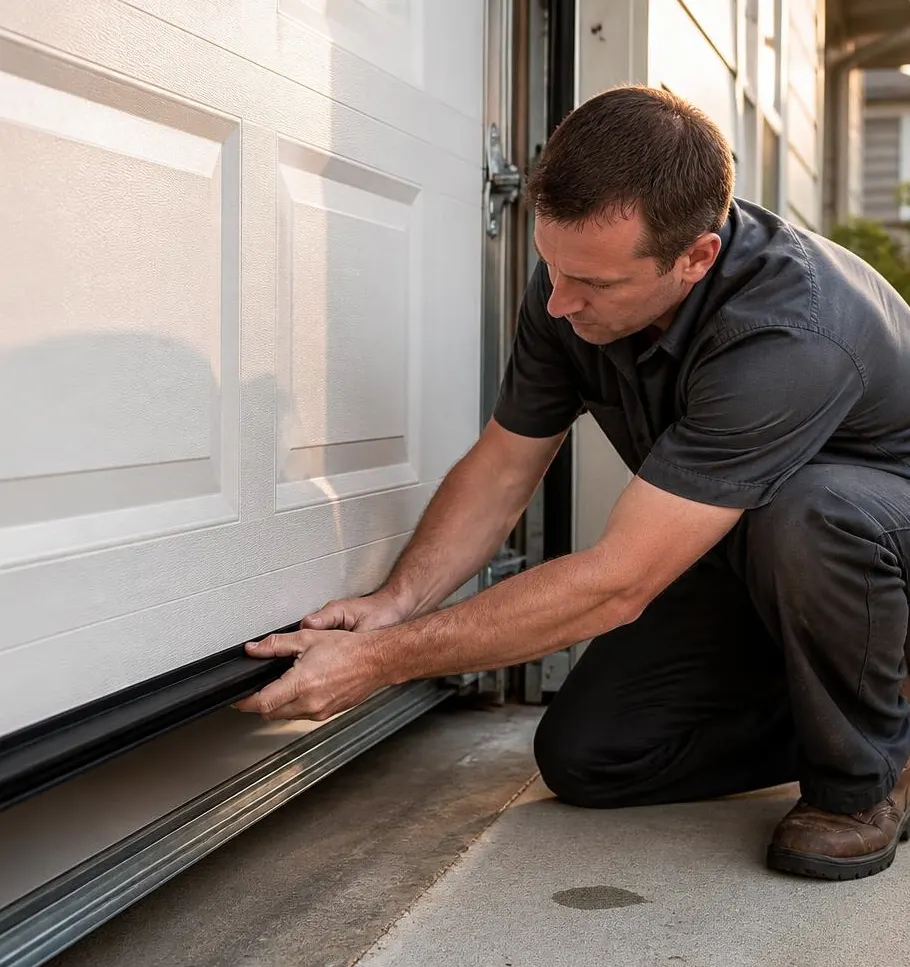
Run your hand along the bottom seal and side seals. Press a flashlight against the inside at night and see if you can spot daylight gaps. Cracked or flattened weatherstripping lets humid air, water, and insects in — swap it out if it's lost its flex.
6. Test the Auto-Reverse Safety Feature (2 minutes)
Place a block of wood or a roll of paper towels in the door's path and close it. The door should reverse on contact. Also wave a broom handle through the photo-eye sensor beams while the door is closing — it should stop and reverse. If either test fails, stop using the opener until it's fixed.
7. Listen and Observe (2 minutes)
Open and close the door once, listening for grinding, popping, or a slow start. Watch whether the door moves evenly or one side lags — a sign of spring imbalance.
What's Safe for a Homeowner — and What Isn't
Everything above is low-risk because it avoids the parts of the system under heavy tension. What you should not touch yourself: torsion or extension springs, the cables that run along the tracks, or anything involving disconnecting the opener arm while the door is under spring load. These parts store enough force to cause serious injury if they let go, and after years of coastal humidity they corrode in ways that aren't always visible from the outside.
When to Call Live Oak Overhead Door Co
If your seasonal check turns up a bent track, a cracked roller, a spring that looks stretched or rusted, or an opener that's failing the auto-reverse test, that's the point to call in a technician rather than keep going. Our Garage Door Maintenance & Tune-Up service covers a full inspection and adjustment of springs, cables, and opener calibration — the parts that are genuinely dangerous to handle without the right tools. If something's already failed, our Cable & Roller Replacement service gets those components swapped out and tested the same visit.
If your twenty-minute check turned up something that doesn't look right, give Live Oak Overhead Door Co a call. We serve homeowners and businesses throughout Live Oak, Wellborn, Dowling Park, McAlpin, Branford, Mayo, Lake City, and Jasper, and we'll get it sorted before it turns into an emergency.