
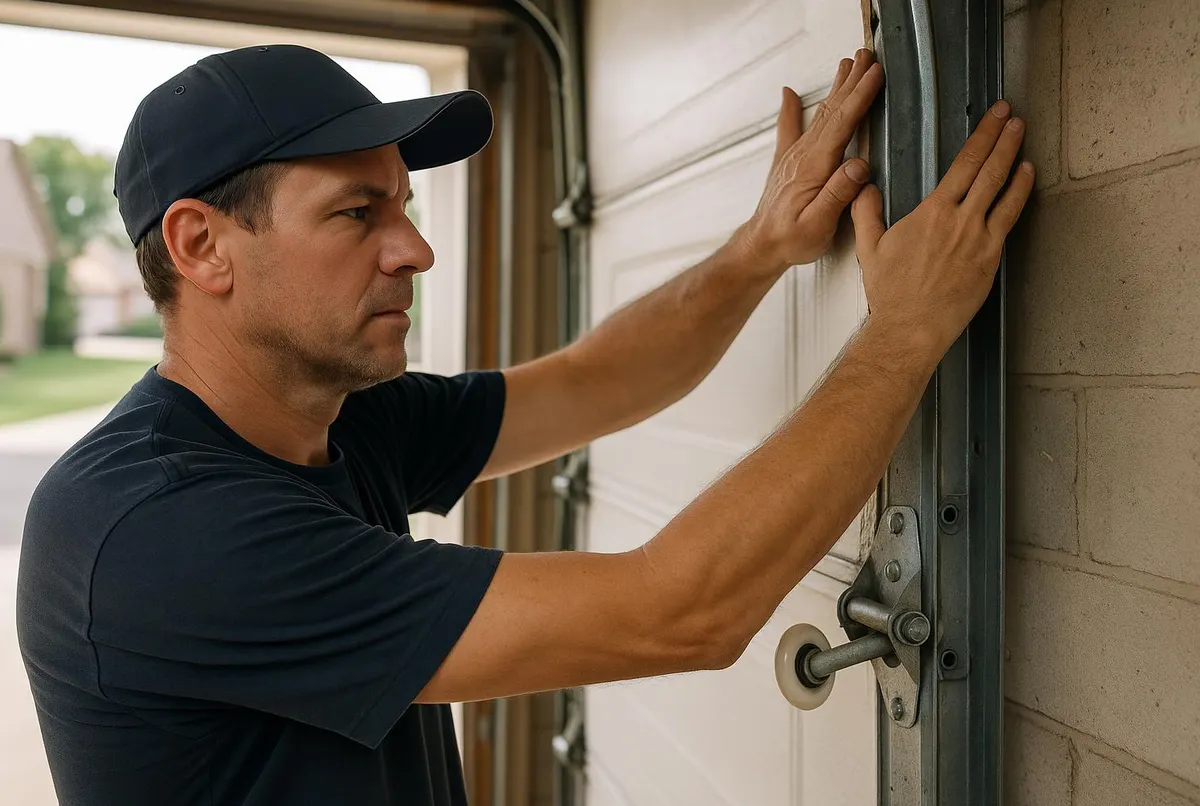
What a Technician Sees on This Call
The call usually starts with two different stories. One spouse says the garage door "just needs the sensitivity turned up" because it keeps reversing before it closes. The other spouse swears something is broken and wants it fixed properly, not adjusted around. By the time a technician gets there, the force dial has usually been cranked two or three notches past where it started, the door is slamming down harder than it should, and nobody remembers what the original setting even was.
This is one of the most common service calls in the Live Oak area, and it almost never starts with a bad opener. It starts with a door that got a little harder to move — from swollen wood, a rusty roller, a sagging track — and someone solved it by telling the opener to push harder instead of asking why the door needed more push in the first place.
What Force and Travel Limits Actually Are
Every modern garage door opener has two separate settings that control how it behaves, and they are not the same thing:
- Travel limits tell the opener exactly where "fully open" and "fully closed" are. If this is set wrong, the door stops short of the floor, reverses for no reason, or slams into the frame.
- Force settings tell the opener how much resistance it's allowed to push through before it assumes something is in the way and reverses. This is a safety feature, not a convenience knob.
Travel limits are about position. Force settings are about how hard the motor is willing to fight to get there. Mixing up which one needs adjusting is exactly how a simple fix turns into a damaged door.
Why Turning Up the Force Is the Wrong First Move
When a door starts reversing unexpectedly, the instinct is to increase the force so the opener "pushes through" whatever is stopping it. The problem is that the opener is usually reversing for a good reason: something really is creating resistance. Turning up the force doesn't fix that resistance — it just tells the motor to override its own safety system and muscle through it anyway.
That override has consequences. Higher force settings mean:
- More strain on springs, cables, and rollers that were never designed to fight that much resistance
- A door that doesn't stop reliably if a pet, a bike, or a person's foot is underneath it
- Faster wear on the opener's motor and gears
- A bent track or cracked panel if the real cause of the resistance was something physical, not electronic
In other words, cranking the force doesn't solve the underlying problem. It just hides it until something breaks.
Why This Happens More Here Than It Should
Live Oak's heat, humidity, and afternoon downpours are hard on garage doors in ways that aren't always obvious. Wood and composite panels absorb moisture and swell slightly during humid stretches, which changes how much friction the door has moving through its tracks. Metal tracks and rollers near any salt-influenced air or persistent moisture start to develop light surface rust, which adds drag that wasn't there when the opener was first installed and calibrated.
None of that shows up as an obvious problem — it just shows up as "the door feels a little stiffer than it used to." And a door that's stiffer needs more force to move, which trips the opener's safety reversal, which leads straight back to someone adjusting the force dial instead of addressing the swelling, the rust, or the track alignment.
How to Actually Settle the Argument
Before anyone touches a dial, check the actual door:
- Disconnect the opener using the manual release cord.
- Lift the door by hand to roughly waist height and let go. A properly balanced door should stay put. If it drops or shoots up, the springs — not the opener — are the problem.
- Look at the tracks for rust, dents, or debris, especially after a storm.
- Check the rollers for flat spots, cracking, or binding.
- Reconnect the opener and only then test the travel limits and force settings, one at a time, making small adjustments and testing after each change.
If the door is heavy to lift by hand or doesn't hold its position, no opener adjustment will fix that safely. That's a spring or hardware issue, and pushing the opener harder to compensate is the exact shortcut that leads to bent tracks and failed cables.
When to Call Live Oak Overhead Door Co
If you've checked the balance, the tracks, and the rollers and the door still isn't closing right, it's time to get it looked at rather than keep adjusting dials by trial and error. We handle Garage Door Opener Installation when a unit is outdated or mismatched to the door's weight, and we offer Garage Door Maintenance & Tune-Up service to catch the rust, swelling, and alignment issues that cause force problems in the first place — before they turn into a slammed, overworked door or a damaged panel.
If your garage door in Live Oak, Wellborn, Branford, or anywhere nearby is fighting its opener instead of working with it, give Live Oak Overhead Door Co a call and let's settle it the right way.