
What a Storm-Season Service Call Usually Looks Like
The call almost always comes in the day after a bad blow. The homeowner says the door looked fine during the storm, and then somewhere around the worst of the wind, it started shaking, then bowing, then it just gave way. By the time a technician gets there, the panels are buckled inward like a soda can, the tracks are bent away from the wall, and sometimes the opener has been ripped clean off its mounting bracket. Insulation is soaked, the drywall near the header has a crack in it, and in a few cases there's visible movement in the roof decking above the opening. None of that is an exaggeration — it's a predictable sequence once a garage door loses the fight against wind pressure.
Why This Particular Door Is the One That Fails
A garage door is the largest moving opening in most homes, and it's built with thinner material and more moving hardware than any wall around it. When wind hits a closed house, pressure builds on the windward side and drops on the leeward side. A standard wall handles that fine. A garage door, especially an older one without wind-rated bracing, flexes with every gust until a panel buckles, a track pulls loose, or the whole door blows out of the opening.
Once that happens, outside pressure rushes into the garage and pushes up against the underside of the roof structure from inside — which is a major reason uplift and roof damage so often trace back to a garage door failure rather than the roof itself. It's also why insurers and contractors talk about wind-load ratings for garage doors the same way they talk about shutters and roof straps: the door isn't just an appliance, it's part of the structural envelope during a storm.
Humidity and Rust Make It Worse Before the Wind Even Shows Up
Long before hurricane season peaks, the heat and humidity common here have usually already done some quiet damage. Wood and composite panels swell and warp in the moisture, steel hardware starts to surface-rust, and tracks that sat a quarter-inch out of alignment in June can be visibly crooked by September. A door that's already fighting friction, rust, or swelling has less margin left when a real wind event hits it — the same stress that a healthy door shrugs off can be enough to pop a weakened one off track.
A Pre-Storm Checklist That Actually Matters
- Inspect every panel for rust spots, bubbling paint, or swelling at the bottom corners and along seams, where moisture collects first.
- Check track alignment by looking for gaps between the rollers and the track, or a track that's pulled slightly away from the wall bracket — common after repeated wind gusts earlier in the season.
- Tighten loose hardware. Bolts on the track brackets and hinges work loose from the vibration of regular use and prior storms; a loose bracket is often the first thing to give way under pressure.
- Test the auto-reverse safety feature and make sure the opener's battery backup actually holds a charge, since power outages are common during and after these storms.
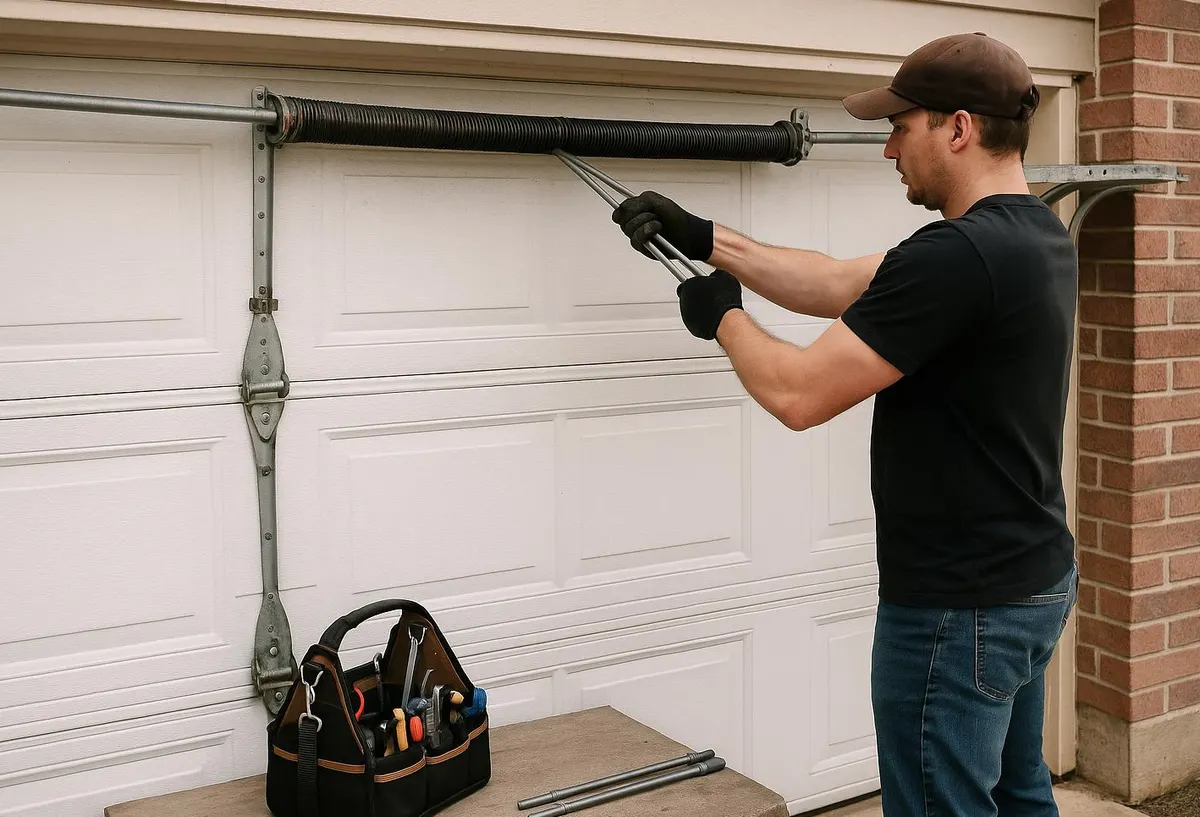
- Lubricate rollers, hinges, and the torsion spring with a garage-door-specific lubricant, not household oil, to cut down on rust binding joints shut.
- Clear the drainage path at the base of the opening so afternoon downpours don't pool against the threshold and push water under the door.
- Ask about retrofit bracing kits for doors that don't already meet wind-load standards — horizontal struts and reinforced end hinges can meaningfully raise what the door can withstand without replacing it outright.
When Reinforcement Isn't Enough
Bracing kits help an existing door perform better, but they have limits. If a door is more than 15–20 years old, already shows frame distortion, or has been patched after a previous storm, reinforcing it is sometimes just delaying the same failure. In those cases a wind-rated replacement door — built with heavier gauge steel, reinforced track, and a stronger opener connection — is the more reliable fix, even though it's a bigger upfront cost than a bracing kit.
After the Storm Passes
Even if the door survives a storm without visible damage, it's worth a walk-around afterward. Debris impacts can dent panels without knocking the door off track, cables can fray from sudden stress even if they don't snap right away, and water intrusion around the bottom seal can soak insulation that then stays damp for days in the humidity, inviting mold and more rust. A five-minute inspection after the weather clears catches these issues while they're still minor.
When to Call Live Oak Overhead Door Co
If a door is already off track, won't close all the way, or shows bent panels or a pulled bracket after a storm, that's not a wait-and-see repair — stress on a damaged door can escalate fast under load. Our Off Track Door Repair service gets the door back in alignment and checks the track, rollers, and cables for related damage in the same visit. For homeowners who want to get ahead of the season rather than react to it, our Garage Door Maintenance & Tune-Up covers hardware tightening, lubrication, spring tension checks, and an honest assessment of whether bracing or a full wind-rated replacement makes more sense for that specific door.
If you're in Live Oak, Wellborn, Dowling Park, McAlpin, Branford, Mayo, Lake City, or Jasper and want your garage door checked before the next storm rolls through, call Live Oak Overhead Door Co — a garage door company in Live Oak FL that shows up, inspects it properly, and fixes what actually needs fixing.